
How to actually size ESS for solar firming
The mistake most EPCs make is sizing for nameplate solar capacity. The right answer is sizing for the worst 30 minutes.
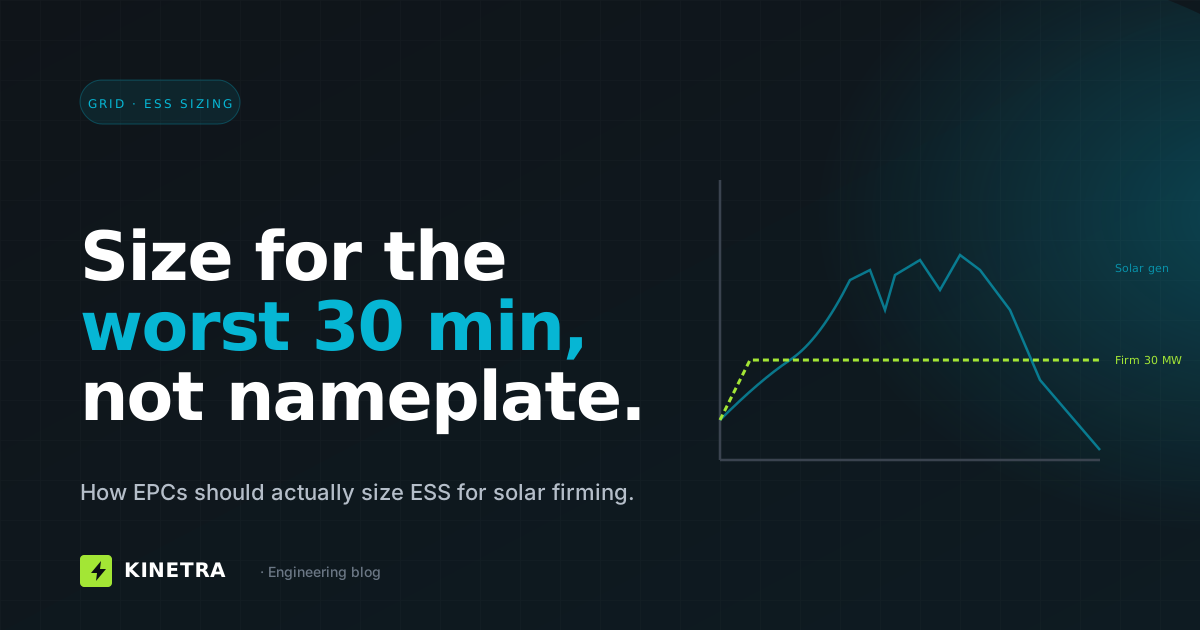
The wrong way to size
Most ESS sizing for solar firming starts with: "how big is the solar?" Then someone picks a percentage — 25% of nameplate, an hour of generation, something. This produces overspecced systems that don't earn back, or underspecced systems that fail their PPA dispatch requirements.
The right way to size
Start with the dispatch profile. What does the offtaker need? Most PPAs in India today have either firm-power or shaped-energy clauses. The ESS exists to bridge the gap between solar generation and contracted dispatch.
The hardest 30 minutes of the year — typically a cloud transient over the array around the dispatch peak — sizes the pack. Everything else is easier.
A worked example
Consider a 50 MW solar plant with a PPA that requires firm 30 MW from 11am-7pm. On a clear day, the array generates 45+ MW from 10am-3pm and tapers off. On a partly-cloudy day, generation can swing from 40 MW to 12 MW within 5 minutes during a cloud passage.
To meet the firm 30 MW dispatch through the worst transient: ESS must deliver 18 MW for the duration of the transient (typically 15-30 min), then have enough remaining capacity to keep dispatching until clouds clear or evening generation comes back.
Sized for that case: ~10-15 MWh / 18 MW. Not 50% of nameplate. Not "an hour."
What this means in INR
For a 50 MW solar PPA in India today, we typically scope ESS at 12-15 MWh / 18-20 MW. At ₹30,000/kWh installed, that's ₹36-45 cr — not the ₹150 cr+ you'd get from sizing at "20% of nameplate."
The ROI math then works on its own: PPA penalties avoided + RTC bonus payments earned = payback in 6-9 years on a 15-year cell warranty.
Related to this post: Grid
See Grid solutions